
The complete guide
How to Choose a Convertible Gym Bag That Actually Works
The problem with most gym bags
Almost everyone starts with a cheap holdall. One zip, one big hole, no structure. You throw in a towel, a water bottle, a pair of trainers and a change of clothes, and within a week the inside smells like a changing room. Clean socks pick up grit from your shoes. A damp towel soaks the book you meant to read on the train. You end up unpacking the whole thing just to find a padlock.
The second problem is how you carry it. A duffle on one shoulder is fine for twenty metres from the car to the door. It is miserable on a bike, on a crowded bus, or when you are also dragging a suitcase through a station. People buy a second bag for travel, then a third for weekends, and none of them get used properly.
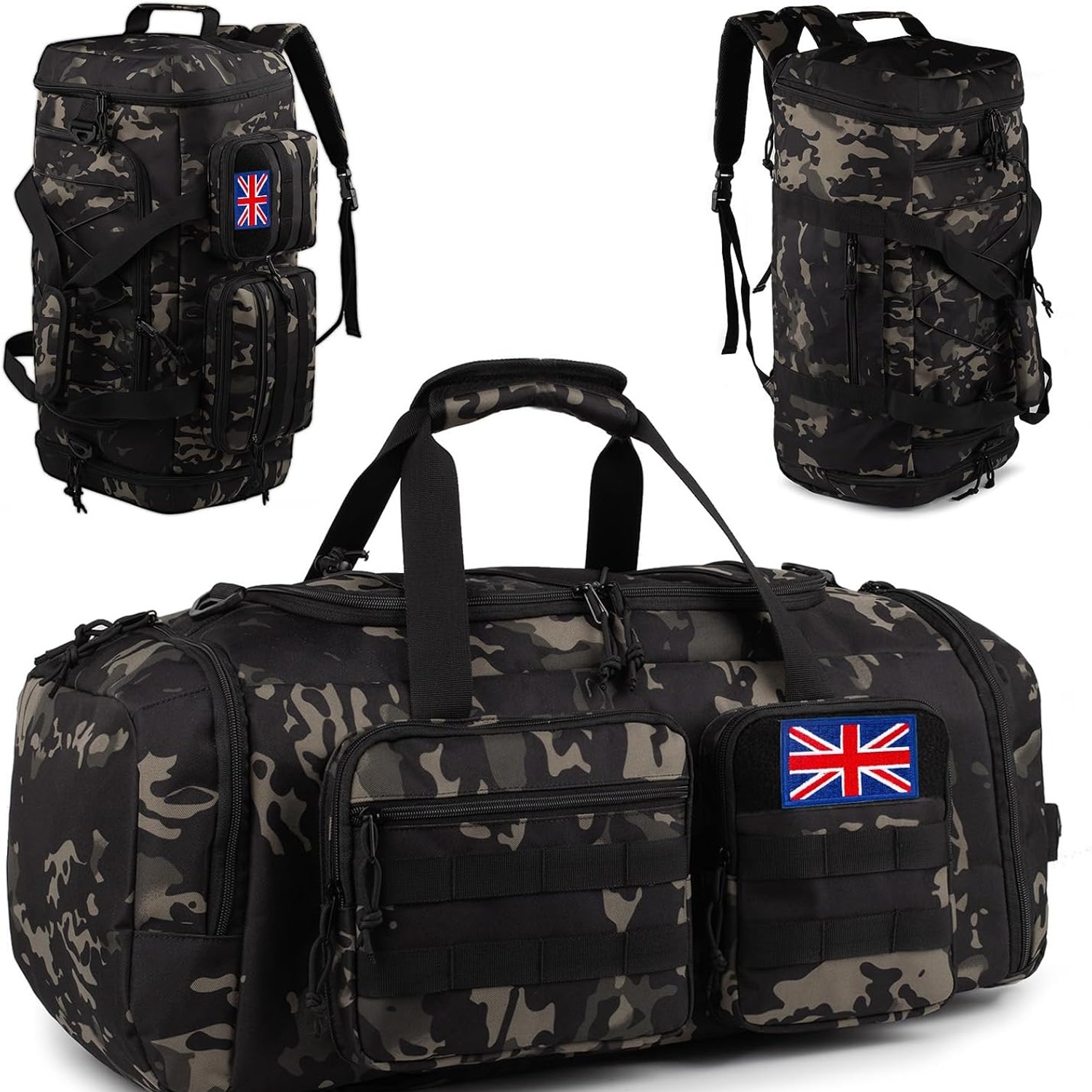
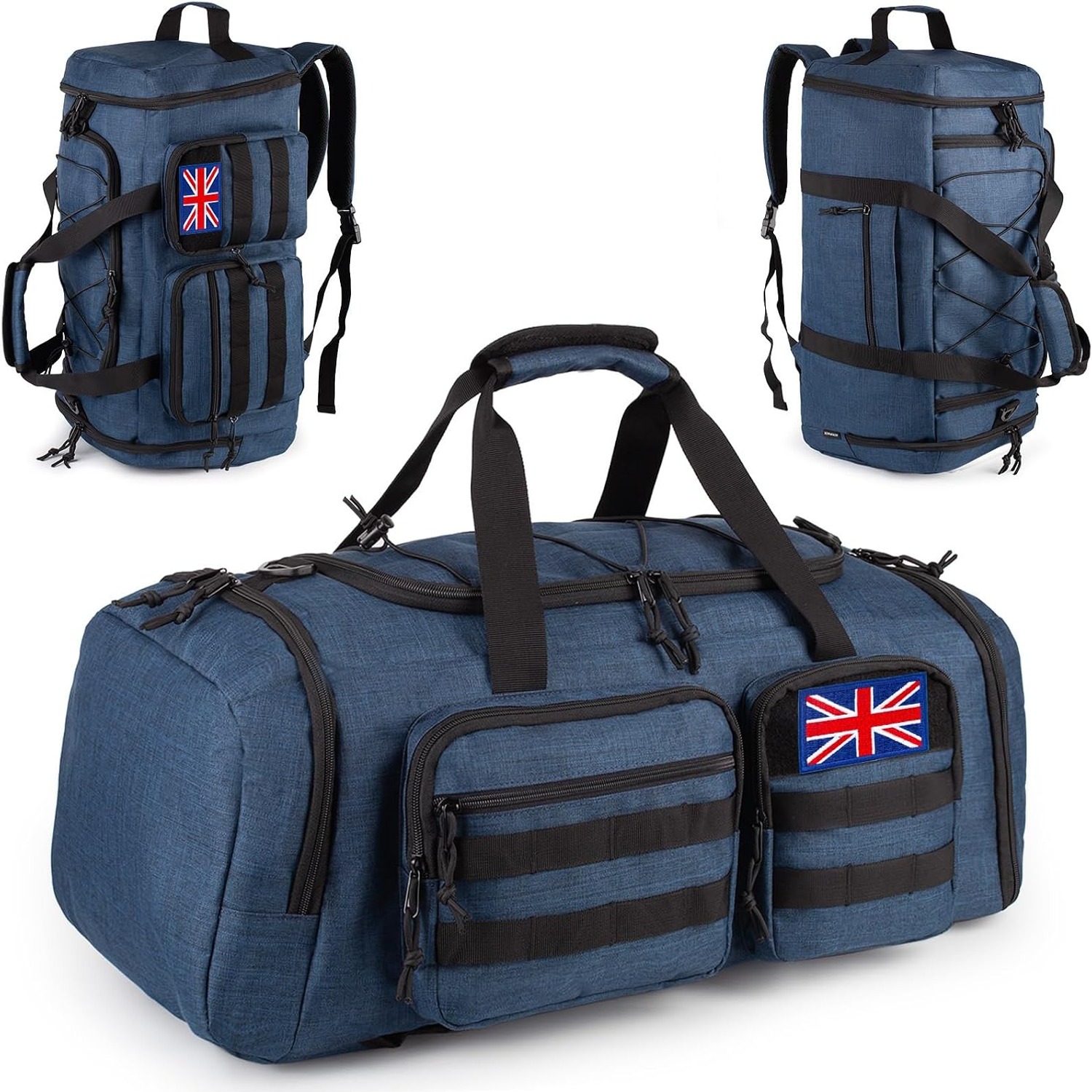
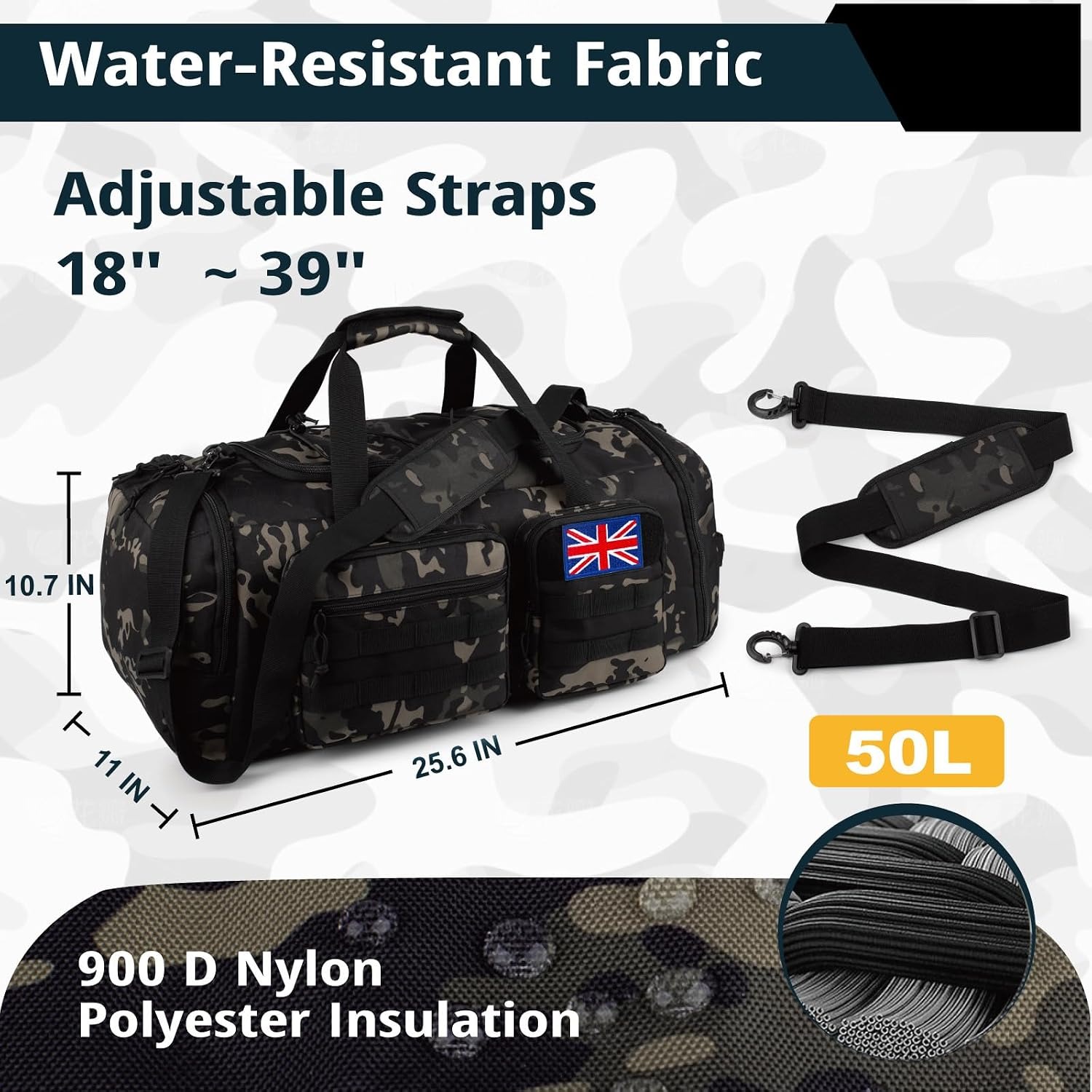
A convertible gym bag tries to fix both issues at once. It gives you organised compartments so wet, dirty and clean things stay apart, and it gives you more than one way to carry the load. The one on this page is 50 litres, measures 65 x 28 x 27 cm and weighs 1.37 kg empty, which puts it right in the middle of useful.
How the 3-in-1 carry system works
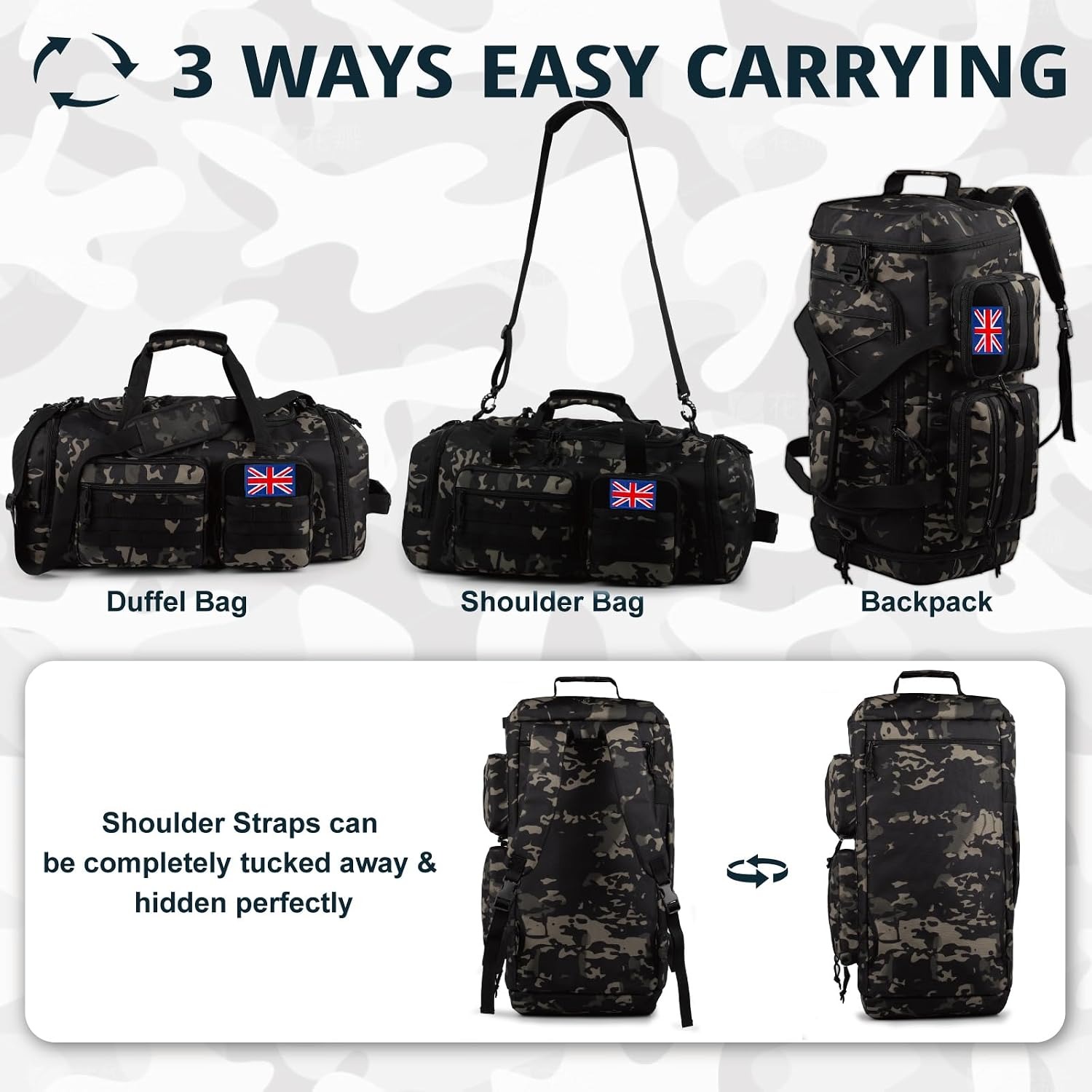
The three modes are duffle, backpack and crossbody. In duffle mode you use the padded double handles, which join in the middle so the bag sits balanced against your leg. For longer walks, the backpack straps take over and put the weight on both shoulders, which matters a lot once you pass about eight or nine kilos of kit. For short hops, there is a detachable adjustable shoulder strap that gives you a crossbody carry with your hands free.
There is also a web grab handle for lifting the bag out of a car boot or off a luggage belt, and a side hanging loop so you can hook it on a locker peg or a rail. That loop is a small thing that saves your bag from wet changing room floors more often than you would expect.
Switching modes takes seconds. Nothing has to come out of the bag. In practice most people settle into two modes, say backpack for the commute and duffle for the drive, and leave the shoulder strap stashed in a front pocket for the days they need it.
Keeping clean kit away from everything else
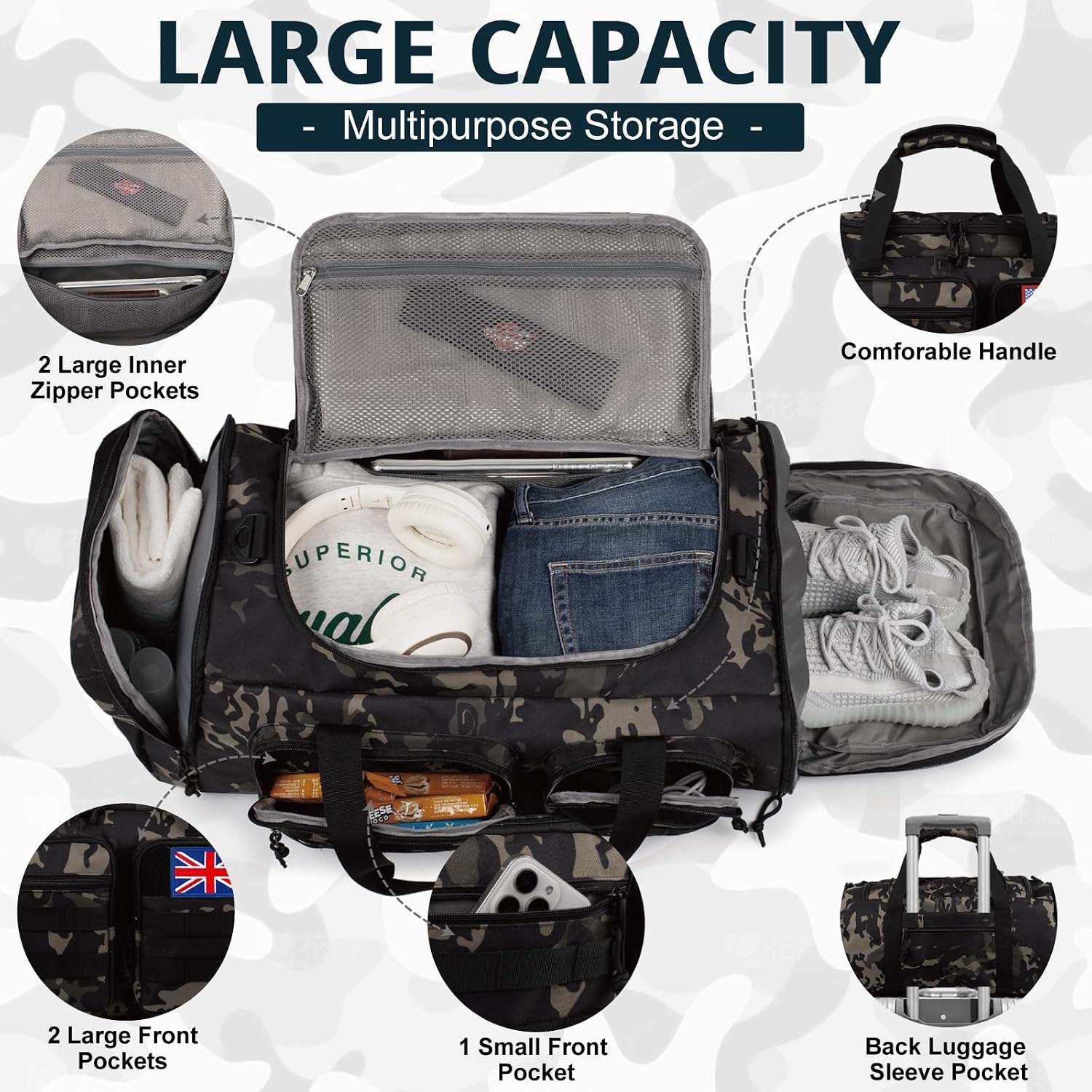
The single biggest upgrade over a plain holdall is compartment separation. This bag has a ventilated shoe compartment at one end, reached from the outside. Trainers go in there and stay there. Grit, mud and odour do not get to your shirt. The ventilation means the space can dry out between sessions rather than sealing moisture in, which is what makes cheap shoe pockets turn sour after a month.
Next to it sits a wet pocket lined with high density PEVA. This is where a damp towel, swim shorts or a soaked base layer go. The lining holds water rather than letting it wick through the fabric. If you swim, this pocket alone justifies the design choice, because carrying wet kit in a plastic bag inside a duffle never ends well.
Inside the main compartment there are two large mesh pockets for the small stuff that normally migrates to the bottom. Outside, three front utility pockets with webbing and a flag patch panel take a wallet, keys, a padlock and chargers. Being able to reach your gym card without opening the main zip is one of those details you only appreciate after you have it.
Who this bag suits
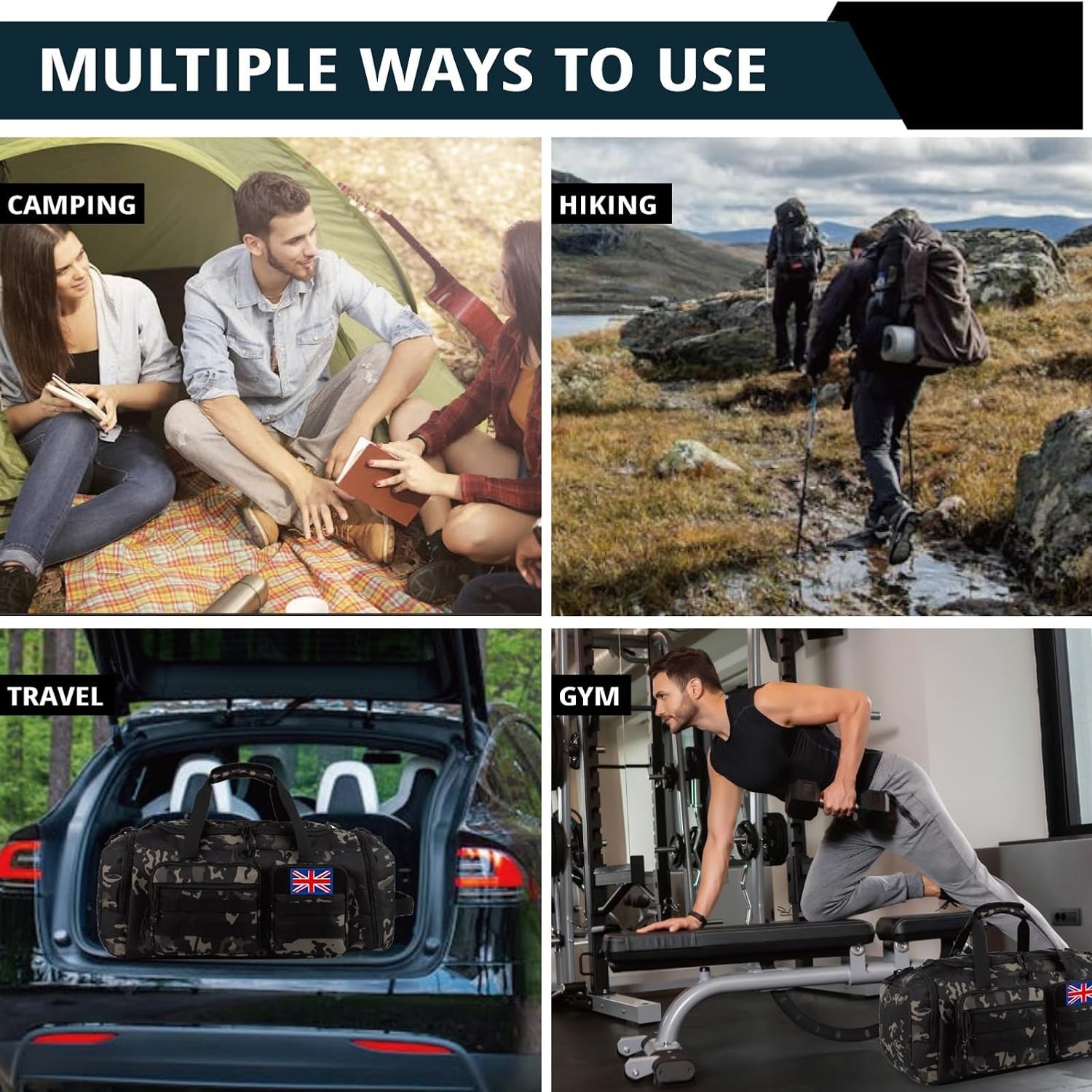
If you train three or four times a week and drive to the gym, a 50 litre bag is more than you strictly need, but the extra room means you can leave a spare towel and a pair of shoes in there permanently. If you commute by train or bike, the backpack mode is the reason to buy it. If you travel for work, the rear luggage sleeve turns it into a carry on companion that rides on your suitcase handle.
It also covers the occasional jobs. A hospital bag, a weekend at a friend's place, a university sports bag, a camping duffle for a two night trip. Those uses all want the same things, a wide opening, tough fabric and somewhere to put wet shoes. This covers them without buying a separate bag each time.
Who should look elsewhere? Anyone who wants a dedicated padded laptop sleeve, because this model does not list one. Anyone who needs a hard sided case for fragile equipment. And anyone doing long trips of a week or more, where 50 litres starts to feel tight once toiletries and shoes take their share.
How to choose the right size and material
Capacity is the first decision. Under 30 litres is a day bag, fine for a towel, shoes and a kit change but nothing more. Around 40 to 50 litres is the sweet spot for people who want one bag for both gym and short travel. Above 60 litres you are into expedition territory, and the bag becomes awkward to carry full.
Fabric matters as much as size. The denier number, 900D here, tells you how thick the yarn is. Higher denier polyester resists abrasion, which is what wears bags out first, usually along the base and the corners where it drags on floors. A water resistant finish sheds light rain and splashes. It is not the same as waterproof, so do not expect it to survive a storm, but it handles the walk from the car park in drizzle without soaking your clothes.
Then look at the zips and handles. Long zips that open the body wide make packing easier than a narrow top opening. Padded handles save your hands when the bag is heavy. A grab handle on the end is underrated for lifting out of car boots. All of those are present on this model, which is part of why it works as a single bag for several jobs.
Finally, think about weight. At 1.37 kg empty, this sits in a sensible range. Very light bags usually cut corners on fabric thickness. Very heavy ones eat into airline allowances before you pack anything.
Packing it properly
Put your shoes in the shoe compartment first, always. Heavy items go near the back panel, which keeps the load close to your spine in backpack mode and stops the bag tipping forward. Clothes roll better than they fold and fill corners more efficiently. Small items live in the mesh pockets so they are not lost under a towel.
Keep the front utility pockets for things you need without stopping, like a card, keys or headphones. Leave the wet pocket empty on the way out, so there is somewhere to put the towel on the way home. If you use the top lanyard to compress a half empty bag, it stops contents sliding around and keeps the shape tidy.
Looking after it
Care is simple. Wipe the shell with a damp cloth and a little mild soap, then let it air dry completely before you store it. Skip the washing machine, the tumble dryer, bleach and the iron, since heat and agitation damage coated fabrics and warp zips.
The habit that matters most is airing it out. When you get home, take out the shoes and anything damp, unzip the bag and leave it open for an hour. That single step prevents nearly every odour problem people have with sports bags. Brush grit off the zips after beach or outdoor use, and never force a zip over an overpacked bag.
Store it somewhere dry. A damp garage or a car boot in winter is the fastest route to a musty smell, even on a water resistant bag.
The short version
This is a 50 litre convertible gym bag in water resistant 900D polyester, measuring 65 x 28 x 27 cm and weighing 1.37 kg empty. It carries as a duffle, a backpack or a crossbody using a detachable strap. A ventilated shoe compartment and a PEVA lined wet pocket keep the dirty and damp parts of your kit away from everything else, while three front pockets, two inner mesh pockets and a rear luggage sleeve cover organisation and travel.
If you want one bag that handles the gym, the commute and a weekend away without smelling like a locker, this is a sensible pick. Check your airline's cabin rules before flying with it, air it out after every session, and it should stay in service for a long time.